Statement of Compliance to Sustainability Principles Framework
Based on the amendment made to the Corporate Governance Communiqué, numbered II-17.1 and published on October 2, 2020, our Company regularly discloses the information expected within the scope of the Sustainability Principles Framework within the Corporate Sustainability Report every year since 2009. In line with the principle of “Comply or Explain”, our related goals, including the elements that may be involved in compliance with the principles or the scope and limitations in data collection, are explained in detail in the GRI (Global Reporting Initiative) Index we publish every year.
Detailed explanations regarding the titles in the Sustainability Principles Framework are given in Appendix 3.
Corporate Sustainability
In terms of corporate sustainability, 2020 has been a difficult year in Turkey as well as around the world. Once again and more than ever, the management of non-financial risks was highlighted. Since March 2020, the Covid-19 pandemic, which has impacted both private and corporate lives, has given companies the opportunity to reflect, set new targets, evaluate opportunities in terms of competitiveness in the fields of domain management and risk management. The pandemic conditions that have a significant effect on the global automotive industry have been a time when Doğuş Otomotiv’s processes and stakeholder impact analysis have been carried out and all steps have been prepared with great precision. The meticulous management of any process within the framework of business continuity, apart from the utmost importance of employees and public health, has helped our Company to successfully overcome this trying time.
The Covid-19 pandemic has gone down in history as the deadliest epidemic disease in history, according to the 2021 Global Risk Study released by the World Economic Forum (WEF) for 16 years, whereas the risk of infectious diseases, which has not been in the top ten for the last 15 years, has been put in the top two for global warming. Doğuş Otomotiv acknowledges this study on multiple stakeholder expectations in terms of both area of effect and potential risk as a guide in terms of sustainability strategies and stakeholder expectations. In addition to the Global Reporting Initiative (GRI) Reporting Principles, Volkswagen AG’s Global Automotive Sustainability Guiding Principles (Drive Sustainability), applicable for business partners worldwide, are also kept in mind as stakeholder requirements are a factor in deciding priorities for Doğuş Otomotiv.
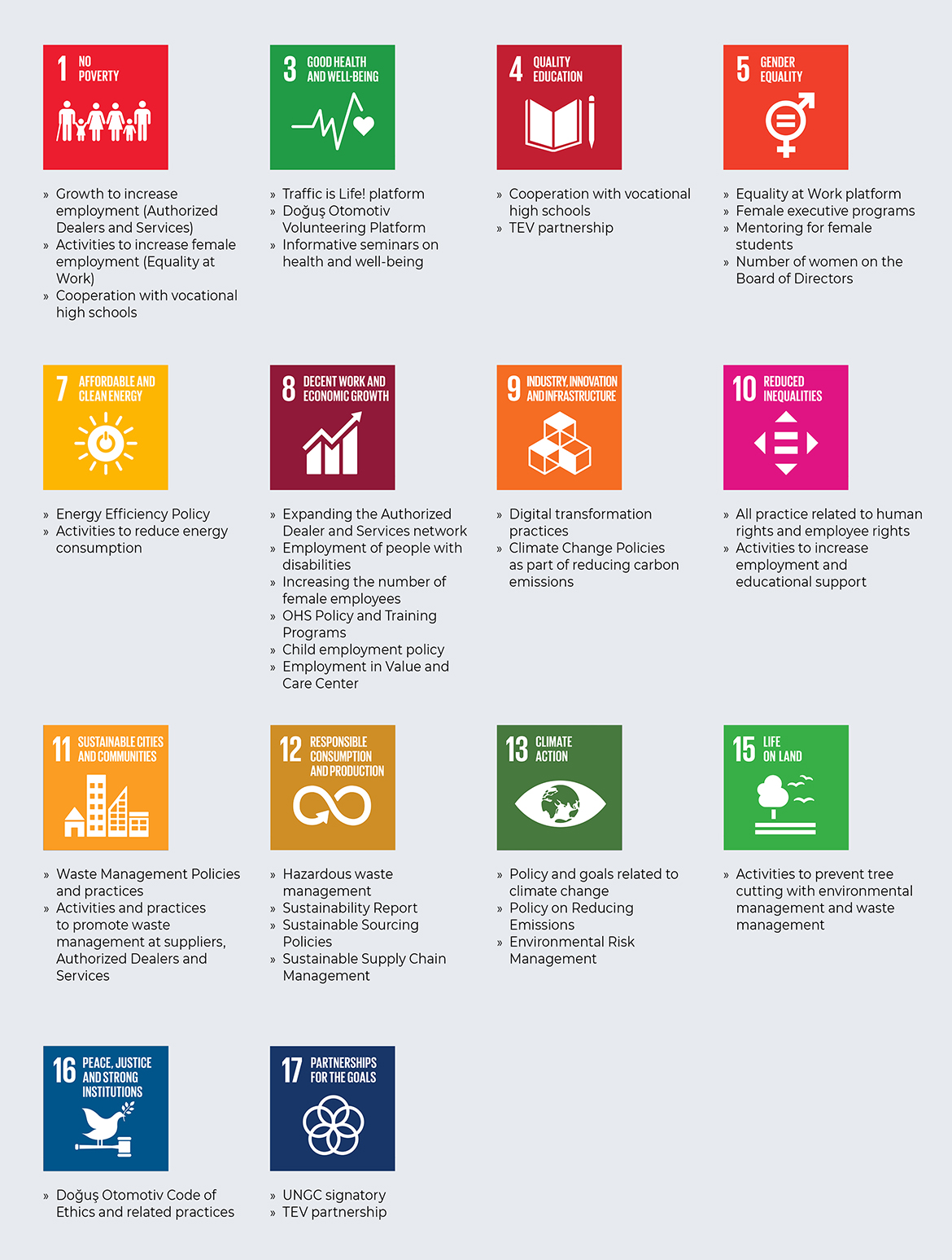
Published with a content index since 2017 and in line with the United Nations Sustainable Development Goals, the Doğuş Otomotiv Sustainability Report continues to be published as the longest running report in its sector in terms of standard and core coverage.
During this challenging time, Doğuş Otomotiv has managed to be fast and effective in implementing facilitating elements for both its employees and customers, with its past equipment and e-management models, considering digital transformation at the top of its sustainability material issues.
We believe that the effect of the transformative impact of Covid-19 in non-financial risk management on the business environment will be seen even more effectively in the future. We are aware that our stakeholders’ expectations will change accordingly. With the same perspective for the post-pandemic, we have been carrying out our strategies in this way which we have been following for 11 years by building all our sustainability policies on stakeholder engagement.
Sustainability Strategy
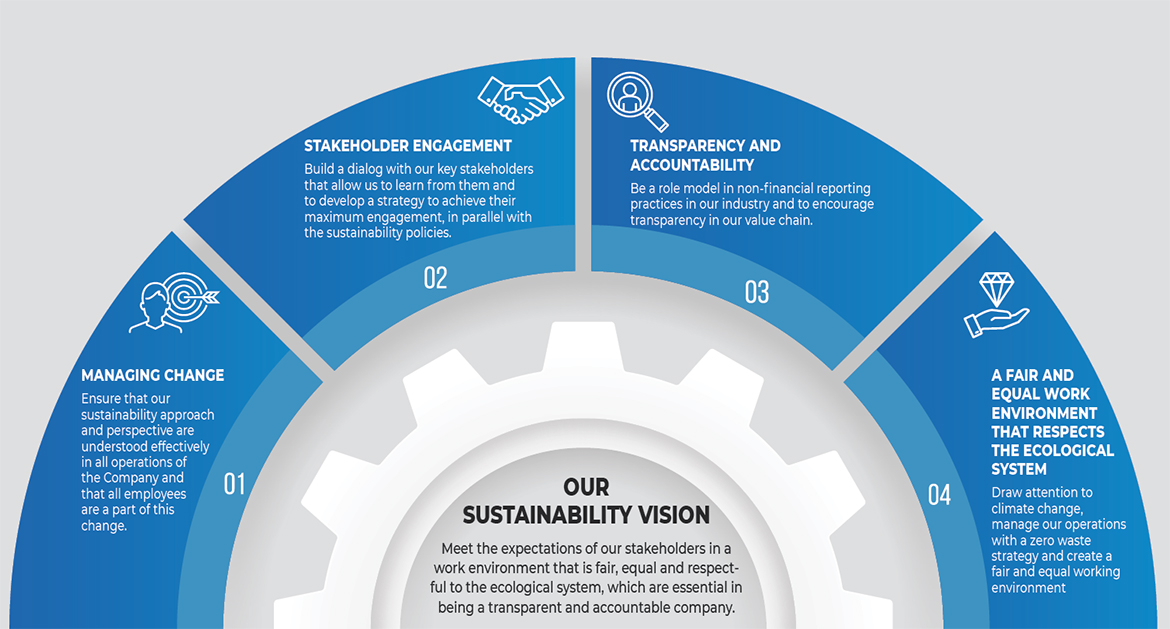
At Doğuş Otomotiv, our sustainability strategy, which is focused on the efficient use of all our resources, the development of a positive impact and the encouragement of our stakeholders’ confidence, is seen as the main element that will take our Company further into the future.
Our strategy for corporate sustainability is to manage our social and environmental impact and to be an important and reliable business partner for our stakeholders by concentrating on quality improvement across our value chain and by demonstrating superior performance with a full, timely and precise understanding of service. For Doğuş Otomotiv, corporate sustainability is the strategies we use to evaluate the solutions we create for our industry’s social, economic and environmental challenges and our corporate conduct that encompasses all our activities.
Our Strategic Sustainability Management Approach
Since 2009, Doğuş Otomotiv has closely monitored, in line with these trends, all developments in the field of Strategic Corporate Sustainability in the world and various and changing corporate standards, and revised and updated its corporate sustainability strategies in this direction.
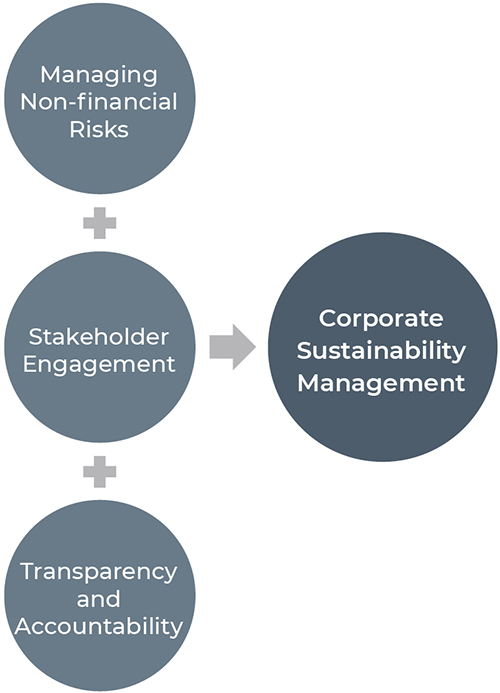
Anticipating and taking action on non-financial risks, a stakeholder participation strategy and openness, which the world’s evolving and changing expectations consider to be crucial in the field of sustainability, are outlined by Doğuş Otomotiv’s basic approach to sustainability. Our attempts to implement this approach into all of our Company processes keep on developing every year.
Managing Non-financial Risks
Management of the non-financial risks as a cornerstone of Doğuş Otomotiv’s Sustainability strategy is overall addressed and monitored in line with the Impact and Materiality aspect. The non-financial risks identified as a material aspect in the 2018 Corporate Sustainability Report fall under the purview of the Corporate Governance and Sustainability Committee, which reports directly to the Board of Directors. Furthermore, Financial Risks under Risk Management are also considered as a material aspect related to economic impact. Within the context of members, the Corporate Governance and Sustainability Committee work in direct relationship with the Early Risk Detection Committee.
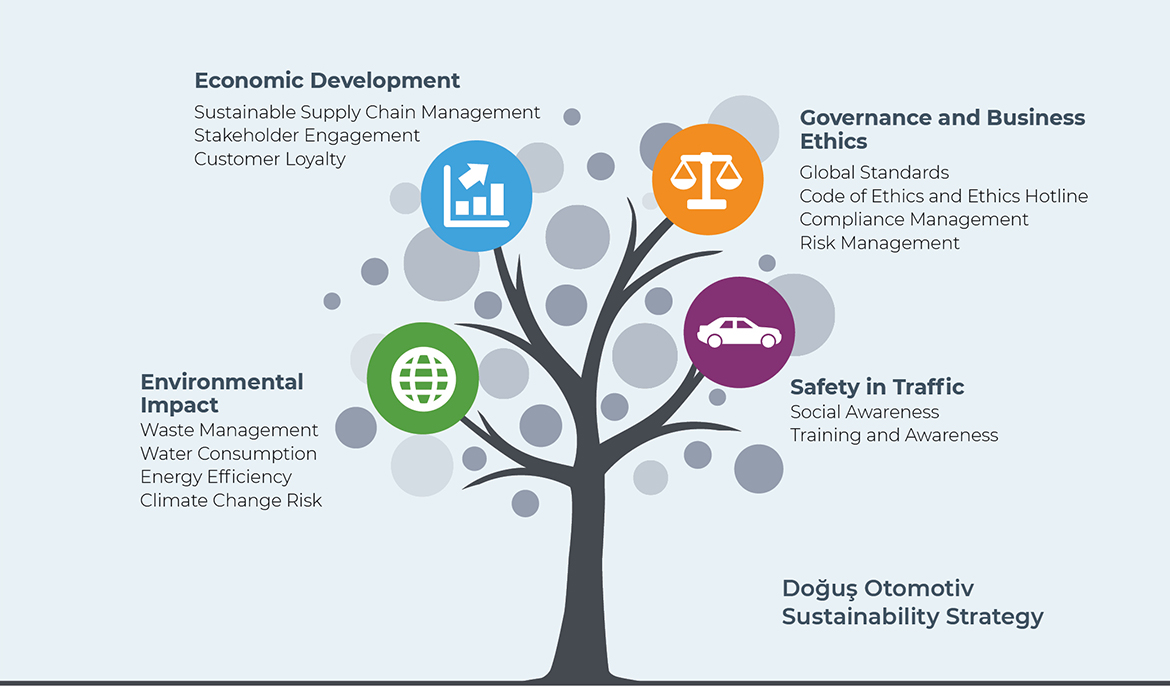
Key Objectives of the Corporate Sustainability Strategy
1. Becoming a Part of Economic Development
We at Doğuş Otomotiv aim to be the industry’s most preferred and trusted stakeholder, in particular for our employees, customers and partners. This is why
we define our material issues as becoming a sustainable company that implements a reliable and sustainable supply chain model that creates value, meets the
expectations of its stakeholders with all of its operations and ways of doing business, positively changes and develops its impact, and that is a part of
economic development.
2. Reducing Our Environmental Impact
We regard raising our environmental awareness by reducing the consumption of natural resources among our most important objectives for long-term success.
Therefore we strive to reduce our environmental impact in water consumption, energy efficiency and waste management.
3. Reaching the Ultimate Standards in Governance and Business Ethics
To create a culture of ultimate transparency and reliability at every stage of our operations, we constantly build on the corporate governance and ethics
processes and support our organizational structure with corporate policies.
4. Building a Culture of Safety in Traffic with the Traffic is Life! Program
We continue to invest in the Traffic is Life! platform to raise awareness about safe driving in traffic as part of our product and service responsibility,
and work to become a part of the solution in social and personal safety by instilling this culture in people of all ages.
Corporate Sustainability Management
Doğuş Otomotiv has been publishing Corporate Sustainability Reports since 2009 in accordance with the GRI (Global Reporting Initiative) Global Reporting Framework. Corporate policies related to the performance areas reported within this framework were studied in the sub-committees formed by members of the Corporate Responsibility Working Group in 2010, and the policies they prepared were submitted to the Corporate Sustainability Monitoring Committee for review and duly approved. In 2017, the material aspects of the time were updated with the participation of the Corporate Sustainability Council and the Corporate Sustainability Committee members. Implementation of the updated materiality aspects began in 2018, and the work plans in line with the targets of these performances were introduced in 2019.
In 2020, the Environmental Management System ISO 14001:2015 was formed and certification studies commenced. The system, which was set up to include the entire Doğuş Otomotiv Şekerpınar campus, will be audited in the first months of 2021 and a globally valid ISO 14.001 certificate will be obtained.
At Doğuş Otomotiv, we design all processes and set all targets with a view to adopting a responsible management approach across our entire value chain. This involves designing our corporate management approach with a focus on sustainability and building our management model on the pillar of sustainability.
At Doğuş Otomotiv, we follow sustainability developments both in Turkey and the world, observe the laws and regulations directly affecting our key stakeholders and plan our activities to integrate compliance requirements into our business processes as quickly as possible. As we move toward a strategic sustainability management that spans our entire value chain at Doğuş Otomotiv, we strive to build a sustainable supply chain that continually improves the culture of doing business right through an integrated compliance and risk management model within the organization.
We adopt a systematic approach to sustainability management to understand risks and to manage them proactively. The fact that our business decisions include diligently calculated risks and managing them sensibly delivers long-term value for all our stakeholders.
This business universe with very broad impact also requires managing different expectations of various stakeholder groups, accurate impact analysis and a risk management approach. Accordingly, the Corporate Governance Committee, which reports directly to the Board of Directors, was renamed Corporate Governance and Sustainability Committee in 2016 with the addition of sustainability to its duties, thus becoming officially responsible for all sustainability-related strategies, policies and targets. The Committee, which convened 4 times in 2020, consists of five members and is headed by an independent Board Member. Two of the five committee members are non-executive directors. Two members of the Early Risk Detection Committee, which reports to Doğuş Otomotiv’s Board of Directors and is directly involved in sustainability-related issues, are also members of the Corporate Governance and Sustainability Committee. The Company also has in place a Sustainability Council under the higher committee. The Investor Relations Representative, a member of the higher committee, also serves on this Council and assumes responsibilities such as gathering information for the committee, communicating the findings of the Council to the committee during decision-making processes and reporting the operational risks and opportunities to the committee when needed. The General Manager of Digital Transformation and Corporate Communications is a natural member of the Council and assumes responsibility as a member of the Executive Committee on sustainability issues. The Sustainability Council of Doğuş Otomotiv was formed by all the Company’s organizational and administrative units and representatives of subsidiaries and met online 4 times in 2020 to assess the Company’s sustainability objectives and results. The members of the Environmental Committee needed to set up the ISO 14001 Environmental Management Framework were also formed consisting of representatives of the related departments among the members of the Council, thus directly connecting them to the Board of Directors’ associated Corporate Management and Sustainability Committee.
Corporate Governance and Sustainability Committee is responsible for monitoring sustainability-related issues on behalf of the Board of Directors, and setting and managing targets. This committee identifies whether or not corporate governance principles are applied at the Company, reasons if not, and conflicts of interest that may arise due to lack of full compliance with these principles, and provides improvement recommendations to the Board of Directors for these practices. The committee also briefs the Board of Directors about preventive/remedial measures to ensure implementation of sustainability principles as well as opportunities and action results. In addition to implementing corporate governance principles, the Committee is furthermore involved in managing, providing advice and coordinating a number of activities that relevant institutions and stakeholders may require in line with the social, environmental, economic and ethical responsibilities of the Company. The Committee may delegate some of its duties and responsibilities by requesting the formation of a sub-committee directly under itself. Such a sub-committee must consist of senior executives appointed by the Board of Directors. The sub-committee performs its duties and responsibilities with the support of a working group or council formed by certain department managers designated for the job, and participates in the Committee meetings, and presents direct and regular reports to the Committee. The Corporate Sustainability Council, which is composed of managers and employees from all departments within the Company, reports to the committee.
In line with current requirements and evolving procedures, Doğuş Otomotiv Sustainability policies are also reviewed and revised. The Bribery and Corruption Policy and the Anti-Money Laundering and Terrorist Financing Policies and the Policy on Energy and Environmental Management were revised in 2020 and added to the Code of Ethics of Doğuş Otomotiv. It is also shared on the website under the relevant title.
Detailed information on Corporate Sustainability Management is released on the Global Reporting Initiative (GRI) Index website every year as part of the Sustainability Report, and if any penalty is charged as a result of litigation brought against our Company on environmental, social and corporate governance issues.
https://www.dogusotomotiv.com.tr/en/sustainability-2019/sustainability1/sustainability-reports
Since 2018, the Doğuş Otomotiv Sustainability Report has been subject to a selective audit by an independent assurance company and has been released alongside the assurance report.
Impact and Materiality
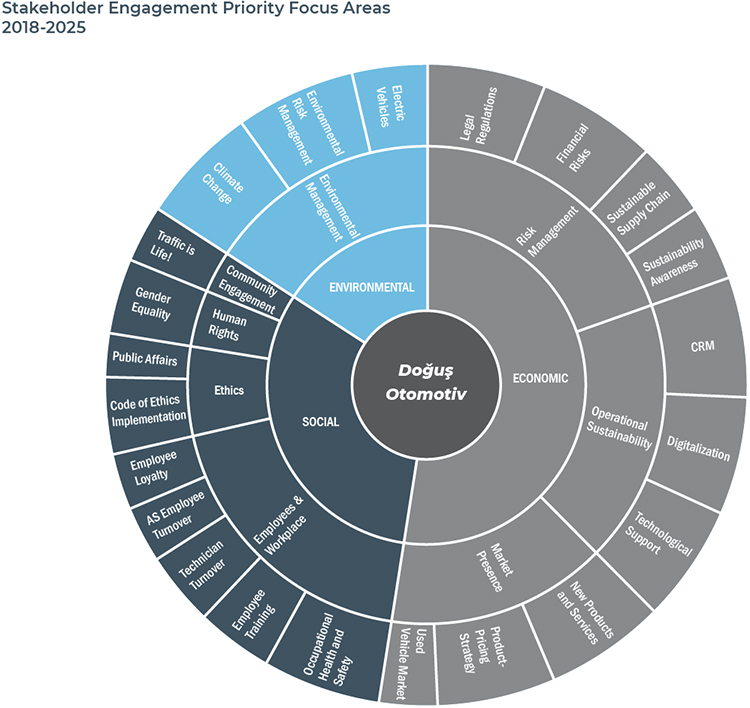
The social, environmental and economic aspects, which Doğuş Otomotiv affects directly due to its operations as well as those that have direct impact on its activities, lie at the core of its sustainability strategy focused on stakeholder engagement. This impact analysis that aligns with the expectations of the Company’s key stakeholders is created by careful consideration of this foundation. In determining the Materiality Aspects disclosed in the 2018 Sustainability Report, the United Nations Sustainable Development Goals were also included in the process and the targets set according to these goals have also been considered since then. After a series of studies conducted in December 2017, new materiality aspects that match Doğuş Otomotiv’s 2025 goals have been identified and defined. However, the material issues are updated with a multi-stakeholder participation approach and revised with the approval of the Committee in the event of changing economic and social conditions. As of 2020, the Compliance Framework for Sustainability Principles published on October 2, 2020 by the Capital Markets Board and the Sustainability Guidelines for the Automotive Sector published by the Drive Sustainability initiative and used by Volkswagen AG have also been included in the reporting scope.
Priority issues found as a result of the materiality research in social, environmental and economic areas were grouped under eight key headings. While risk management, organizational sustainability, market presence, social workers and the business climate are included in the economic field, ethics, human rights and community engagement have been listed as material topics. The Environmental Management issue comes to the fore with priority under the environmental title. In the 2020 Corporate Sustainability Report, comprehensive performance and priorities regarding the areas are addressed in depth.
In line with the material issues, Doğuş Otomotiv Sustainability primary performance indicators are announced, and the available data is released in a 3-year comparison. As a company operating in the automotive sector in the sales and after-sales services segment, due to the absence of a prior reporting in the GRI comprehensive application level reporting option, our Company cannot conduct benchmarking studies in the local and international world. However, it primarily tracks and organizes its priorities accordingly to the OEMs, who are main stakeholders in the first degree, and the challenges and opportunities in terms of sustainability across the industry.
Stakeholder Engagement
Being perceived as a company that values the importance of its stakeholders’ opinions, respects the protection of their interests, and delivers creative services beyond expectations by identifying and constantly monitoring their expectations is of utmost importance for Doğuş Otomotiv’s business objectives, strategic growth and community engagement policies. Doğuş Otomotiv plays active roles in civil society and trade organizations related to its business in line with its pioneering and leading position, enters into necessary collaborations and takes part in initiatives. Doğuş Otomotiv’s corporate communications activities and relationships are based on ensuring integrity and transparency, providing information and engaging in dialogue. Communication strategies and practices of Doğuş Otomotiv are managed and performed by the Digital Transformation and Corporate Communications Department. All the information that Doğuş Otomotiv shares with its stakeholders regarding the Company and its spokespersons are prepared by the Digital Transformation and Corporate Communications Department, which uses an accountable and transparent communication method that prioritizes integrity.
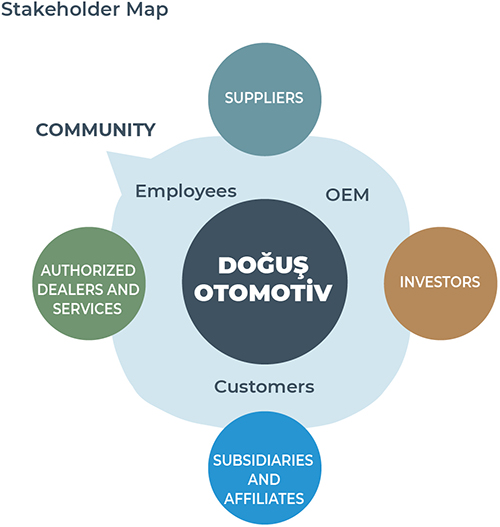
Stakeholder Engagement is a method that has long formed the basis of Doğuş Otomotiv’s sustainability strategy and is integrated into the process with respect to all its brands and operations. However, given that the Company represents 12 brands in Turkey and deals with more than 8,000 direct or indirect employees and the management of over 570 sales and aftersales service locations, different expectations of numerous stakeholders arise in various environments. Stakeholder expectations may also vary depending on different regions and cultures or different industries.
This is why Doğuş Otomotiv defines its key stakeholders as “individuals, groups and organizations with direct impact on the Company’s operations”. In the key stakeholder study conducted in accordance with this definition, the key stakeholders of the Company, whose operations involve sales and aftersales services, have been identified as the employees, customers and manufacturers of the products imported directly. Our stakeholder engagement strategy is designed to create a responsive and transparent dialogue environment with all key stakeholders, to inquire about stakeholder expectations openly and regularly, and to develop solutions to meet these expectations or to set goals.
In line with its material issues, Doğuş Otomotiv publishes its annual sustainability report and updates website on which mechanisms of dialogue and how often it meets its main stakeholders.
Sustainable Environment
With the changing expectations of consumers, rapid technological developments, globalization, new mergers and acquisitions, and collaborations, automotive ecosystem is also constantly evolving. We live in a new century when people’s definition of mobility will also change rapidly. Multi-modal transportation systems are becoming increasingly more common while smart devices to respond to consumers’ environmental responsibility, safety and information requirements are increasing in unprecedented rates. Meanwhile, automotive manufacturers are in fierce competition to develop new business models that will help them achieve responsible growth. In this dynamic new age, Doğuş Otomotiv believes that personalized mobility solutions, innovative sales techniques in the retail industry, broad partnerships and collaborations made possible with global regulations and practices will be the keys to success in the next decade. Doğuş Otomotiv also holds the belief that the companies that will lead such change are set to become the businesses of the future. As a distributor in the automotive ecosystem, Doğuş Otomotiv builds on its environmental performance every day and remains committed to:
- Reinforcing customers’ trust,
- Driving change with its Authorized Dealer and Aftersales Service Network,
- Raising awareness for waste management and efficiency, and
- Using resources responsibly by accepting the ecological environment as its key stakeholder.
Doğuş Otomotiv has openly disclosed its focus on protecting the ecological environment with its Environmental Policy published in 2010 and the Energy Efficiency, Water Management and Waste Management policies included in 2014.
Doğuş Otomotiv continues to be a role model in the industry on topics such as managing the short and long-term risks that may emerge from climate change and ensuring that the appropriate changes to the process are made. The development of the ISO 14001:2015 Environmental Management Framework, which includes all units in the Şekerpınar campus, began in 2020 and the certification process started in this direction. By implementing the system in 2021, Doğuş Otomotiv will be able to reach its stakeholders more clearly with concrete environmental goals and will also incorporate the ISO 14064 Greenhouse Gas Measurement and Control System and the ISO 50001 Energy Management System by the end of year.
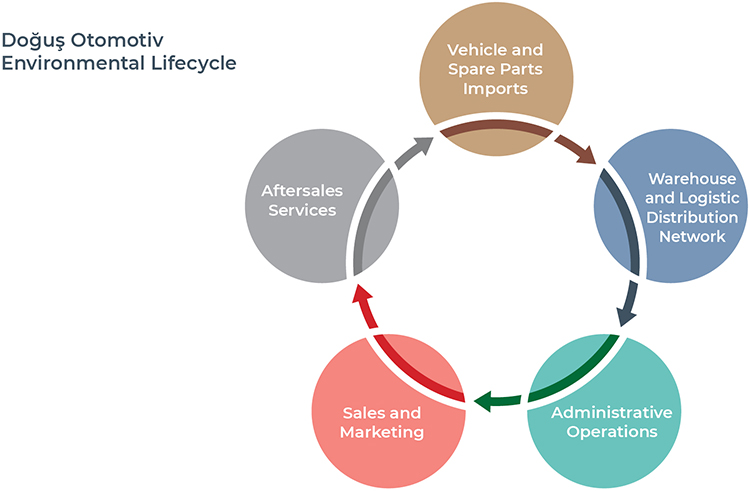
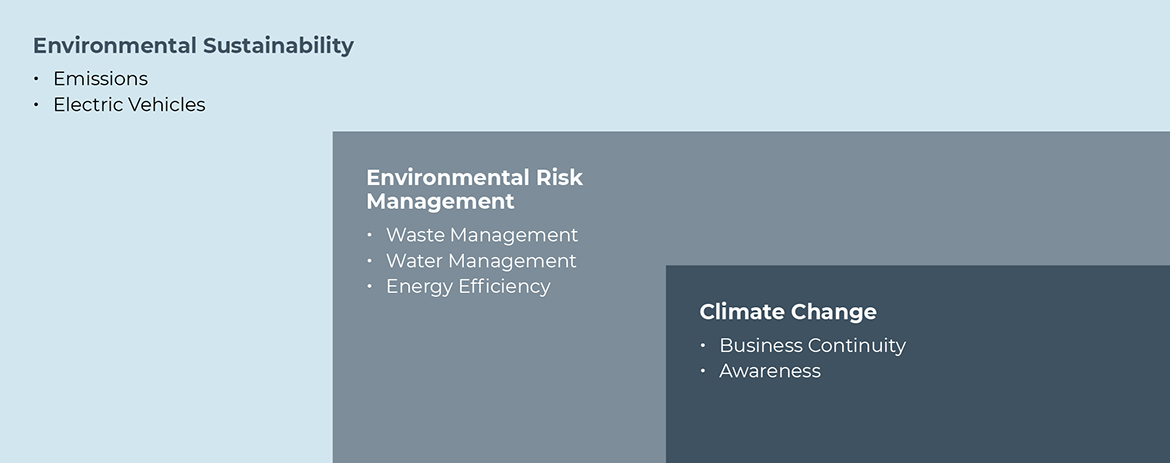
Doğuş Otomotiv monitors and manages its environmental impact at every stage of the business lifecycle both as part of its risk management practices and also in terms of its environmental sustainability aspect. In line with the updated materiality aspects, the Company will continue to report its environmental sustainability performance under the following topics beginning with the 2018 Sustainability Report. In line with these goals, the ISO 14001 Environmental Management System, which was developed in 2020, has also been established and demonstrated that these priorities remain valid in studies of environmental priorities, threats and opportunities and enforcement responsibilities.
For Doğuş Otomotiv, managing its impact across the environmental sustainability lifecycle means engaging in improvement activities to mitigate its potential negative impact, launching informative, educational and other relevant programs to raise environmental responsibility awareness among its key stakeholders, and particularly its employees, and ensuring efficient use of resources by setting targets and commitments for these purposes. Doğuş Otomotiv, which monitors its impact at every stage across the environmental lifecycle and provides regular information to raise awareness among its stakeholders, has been disclosing its environmental data to the public since 2009 through Sustainability Reports:
https://www.dogusotomotiv.com.tr/en/sustainability-2019/sustainability1/sustainability-reports
Transparency and Accountability
Doğuş Otomotiv has been openly reporting its social, environmental, economic and ethical performance in its fields of operation in international standards since 2009. The Company reviews the feedback received from stakeholders on these performances and sets its targets for the following year accordingly.
Doğuş Otomotiv also encourages the reporting within the supply chain of its subsidiaries, suppliers and authorized dealers and services in order to be open about their non-financial results, adds to its report each year a growing number of authorized dealers and services and suppliers, and offers consulting in the field of sustainability to these organizations.
Disclosures about administrative sanctions and penalties imposed on the Company, if any, due to violation of applicable regulations and legislation, are also disclosed in the GRI Index which is published alongside the Corporate Sustainability Report and is available on the website.
Doğuş Otomotiv’s Corporate Sustainability Reports can be found on the corporate website https://www.dogusotomotiv.com.tr/en/sustainability-2019/sustainability1/sustainability-reports
Doğuş Otomotiv and Sustainable Development Goals
The rapid changes in technology, innovation and digital transformation that the automotive industry has undergone in the past five years, both in our local market and across the world, demonstrate the need for companies like Doğuş Otomotiv to take serious responsibilities in terms of their impact.
This impact lies at the heart of the efforts to ensure the economic and social development of communities by pushing the United Nations Sustainable Development Goals high up on the agenda of the private sector. Doğuş Otomotiv believes that questioning the social, economic and environmental expectations of stakeholders, improving responsiveness, determining future strategies based on expectations and analyzing these to anticipate risks and opportunities are all critical for sustainability.
Accordingly, Doğuş Otomotiv continues to publish the United Nations Sustainable Development Goals index as part of its Corporate Sustainability Reports since 2017 and discloses its performances in line with these goals. In the content of the Sustainability Report, our Company will continue to include in a detailed index the sub-goals of the goals that align with the areas of focus and the corporate performance relevant to these goals.
Doğuş Otomotiv has also been a signatory to the Global Compact of the United Nations (UNGC) since 2010 and, for 11 years, has included the UNGC Index in the Sustainability Report. On the website, the index in question is provided.